
Sri Lankan · Dinner
Sri Lankan Lentil Spinach Dhal Light
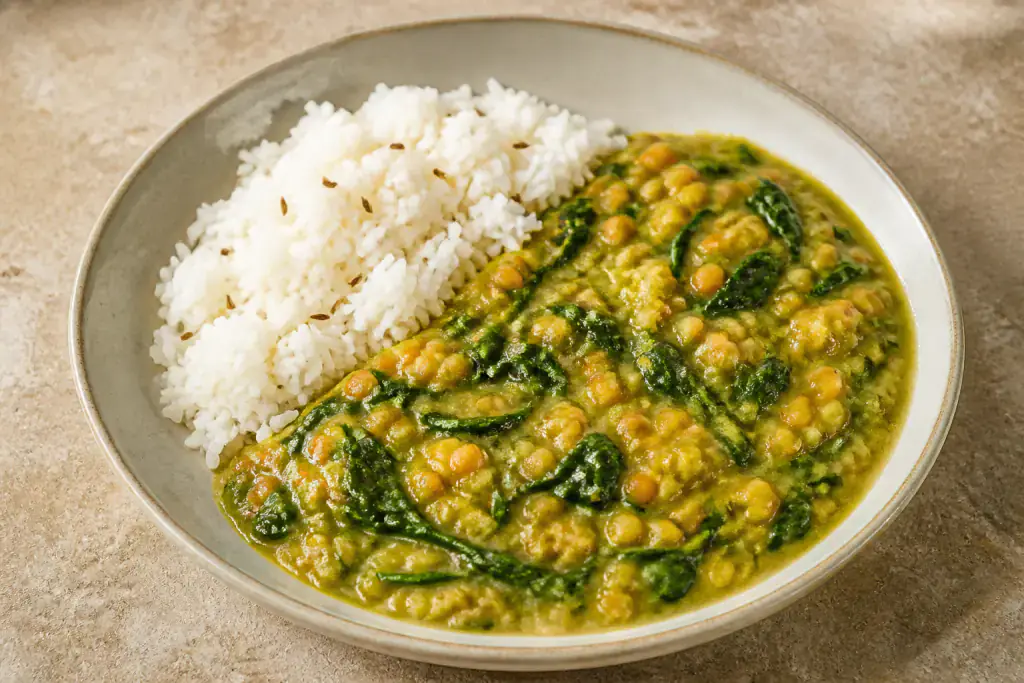
A red lentil and spinach dhal with light coconut milk, curry leaves optional, and chili kept separate.
Key facts
Best fit
A fiber-rich dhal using light coconut milk; monitor lentil and spinach tolerance where needed.
Ingredients
- red lentils
- spinach
- light coconut milk
- rice
- cumin
Nutrition facts
Ingredient details and substitutions
red lentils
Role: quick-cooking plant protein and creamy body
Taste/use: Mild and earthy; cooks down into a soft sauce.
Best swaps: Use moong dal, split peas, tofu, chicken, or eggs.
Health fit: Strong fit for vegetarian protein and fiber.
Caution: IBS and kidney-condition users may need portion guidance.
spinach
Role: greens, minerals, and color
Taste/use: Mild and green; wilts quickly and works in bowls, eggs, dal, and smoothies.
Best swaps: Use kale, bok choy, methi, or zucchini.
Health fit: Useful for iron, folate-style nutrition, and vegetable volume.
Caution: Kidney stone or kidney-condition users may need oxalate, potassium, and mineral guidance.
light coconut milk
Role: lighter dairy-free creaminess
Taste/use: Mildly sweet and creamy; best in light curries and soups.
Best swaps: Use broth, oat milk, yogurt, blended tofu, or a smaller amount of regular coconut milk.
Health fit: Better than full-fat coconut milk for saturated-fat reduction.
Caution: Still contributes saturated fat; heart and calorie-conscious users should measure.
rice
Role: comforting base and carbohydrate structure
Taste/use: Neutral and soft; jasmine is fragrant, basmati is lighter, brown rice is nuttier.
Best swaps: Use millet, quinoa, cauliflower rice, or a half-rice blend depending on carb goals.
Health fit: Useful as a clear measured base, especially with protein and vegetables.
Caution: Diabetes, PCOS, and weight-management users should keep portions measured and pair with protein, fiber, and vegetables.
cumin
Role: earthy warmth and savory depth
Taste/use: Earthy, warm, and nutty; best bloomed gently in oil or toasted.
Best swaps: Use coriander, fennel, caraway, mild curry powder, or smoked paprika.
Health fit: Useful for low-sodium flavor building.
Caution: Strong spices can bother some GERD users; use lightly when needed.
Step-by-step method
- Prep red lentils, spinach, light coconut milk, rice before heating so the dinner cooks evenly.
- Cook lentils until creamy, then add spinach and light coconut milk near the end.
- Cook until the red lentils is tender and the main protein or plant protein is fully cooked.
- Taste at the end and adjust with herbs, measured salt, gentle acidity, or water depending on the health goal.
- Portion clearly before serving so the nutrition facts match the plate.
Who should avoid or modify
- IBS users may need a smaller lentil portion.
- Kidney-condition users should check potassium guidance.
- GERD users should keep chili and heavy coconut portions optional.
- Hypertension users should keep salty sauces, stocks, pickles, and packaged seasonings controlled.
- Diabetes or prediabetes users should portion the starch and pair it with protein, fiber, and non-starchy vegetables.
Chef tips
- Rinse lentils thoroughly.
- Add coconut milk late to avoid splitting.
- Serve chili oil separately.
How to make it suitable
- GERD version: make chili, tomato, citrus, mint, fried toppings, and heavy fat optional or remove them from the base.
- Diabetes-aware version: use a smaller starch portion, add extra non-starchy vegetables, and avoid sweet sauces.
- High-protein version: add a tolerated protein such as tofu, egg, fish, chicken, yogurt, paneer, lentils, or beans depending on allergies and diet pattern.
- Low-sodium version: reduce salty sauces, stocks, pickles, and packaged seasonings, then finish with herbs or gentle spice.
- Vegetarian or vegan version: preserve the current plant-forward structure and check dairy, egg, honey, and sauce labels as needed.
- Allergy-aware version: replace flagged allergens with role-matched swaps and verify labels, sauces, spice blends, and cross-contact risk before serving.
Research sources
FAQs
Is Sri Lankan Lentil Spinach Dhal Light good for meal planning?
Yes. It has a clear prep time, cook time, nutrition profile, ingredient list, and health notes, so it can fit a weekly plan with the right portions.
Can this recipe be changed for allergies?
Yes. The current ingredient list does not flag the main tracked allergens, but users should still verify packaged ingredients and cross-contact risk.
What research supports the health cautions on this page?
This page uses public guidance from NIDDK kidney disease nutrition guidance, NIDDK GERD diet and trigger guidance, American Heart Association Mediterranean diet guidance and keeps health language conservative. It is still food guidance, not medical care.
Related recipes
Safety note
This recipe provides food guidance only. People with severe allergies, kidney disease, pregnancy-related needs, eating disorders, or medication-linked restrictions should confirm plans with a clinician.