
Global · Breakfast
Berry Yogurt Overnight Oats
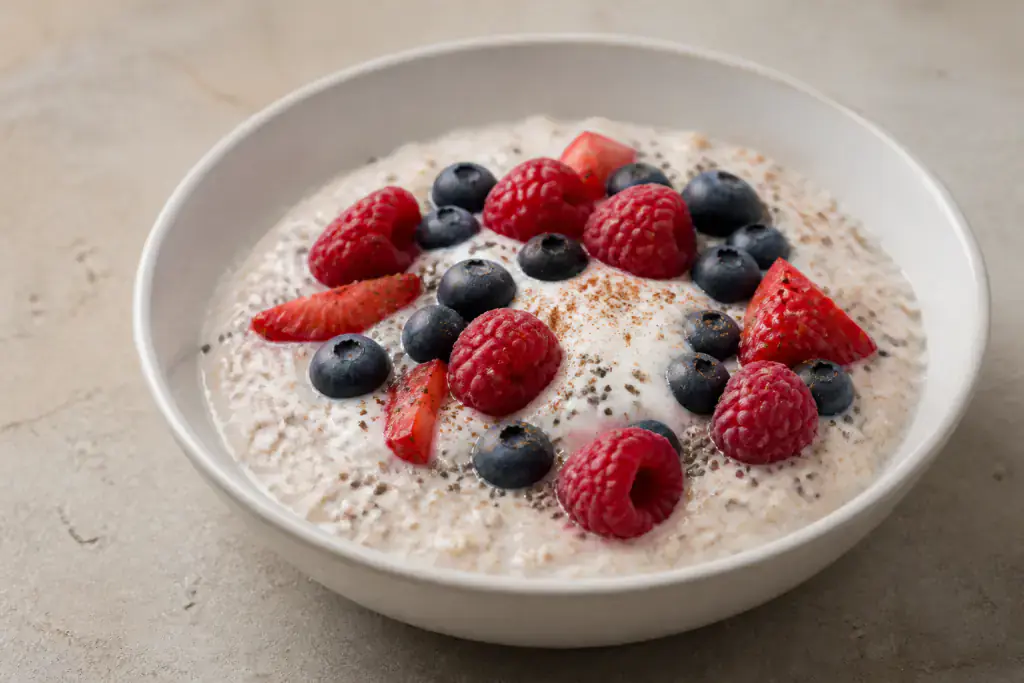
A make-ahead breakfast with oats, plain yogurt, berries, chia, and cinnamon, built to avoid syrup-heavy breakfast patterns.
Key facts
Best fit
Useful for steady-energy breakfast planning when made with plain yogurt and controlled fruit portions.
Ingredients
- oats
- yogurt
- berries
- chia seeds
- cinnamon
- milk
Nutrition facts
Ingredient details and substitutions
oats
Role: fiber-rich breakfast base
Taste/use: Mild, creamy, and slightly nutty; best with fruit, yogurt, seeds, and spices.
Best swaps: Use certified gluten-free oats, chia pudding, millet porridge, or yogurt bowls.
Health fit: Strong fit for higher-fiber, heart-style, and steady-energy breakfasts.
Caution: Celiac users need certified gluten-free oats; diabetes users should portion and avoid sugary toppings.
yogurt
Role: protein, tang, and creamy texture
Taste/use: Tangy and cooling; best in sauces, smoothies, bowls, and marinades.
Best swaps: Use lactose-free yogurt, coconut yogurt, soy yogurt, or blended tofu if tolerated.
Health fit: Useful for protein and calcium if dairy is tolerated.
Caution: Contains milk unless dairy-free; check added sugar and lactose tolerance.
berries
Role: bright sweetness, color, and fiber
Taste/use: Sweet-tart and juicy; best in oats, yogurt, smoothies, and chilled drinks.
Best swaps: Use blueberries, strawberries, apple, mango, or kiwi depending on tolerance.
Health fit: Often useful for lower-added-sugar breakfasts and diabetes-aware desserts.
Caution: Check portions for carbohydrate counting and avoid if personally reactive.
chia seeds
Role: thickening, fiber, and plant omega-3 support
Taste/use: Neutral with a gel texture; best in smoothies, parfaits, and breakfast bowls.
Best swaps: Use ground flax, basil seeds, oats, or omit if seeds are not tolerated.
Health fit: Useful for fiber and plant-based omega-3 style meals.
Caution: Start small with fluids; seed allergies, IBS, and kidney-condition users should review tolerance and minerals.
cinnamon
Role: warm sweetness without sugar
Taste/use: Sweet, woody, and warming; best in oats, drinks, yogurt, and fruit.
Best swaps: Use cardamom, ginger, nutmeg, or vanilla.
Health fit: Useful for lower-added-sugar breakfasts and drinks.
Caution: Use culinary amounts; supplement-level use is a different medical question.
milk
Role: creamy liquid, protein, and calcium support
Taste/use: Creamy and mildly sweet; best in drinks, oats, and sauces.
Best swaps: Use lactose-free milk, soy milk, oat milk, almond-free options, or water depending on allergies.
Health fit: Useful for protein and calcium if tolerated.
Caution: Contains milk allergen and lactose unless modified.
Step-by-step method
- Stir oats, plain yogurt, milk, chia, and cinnamon in a jar or bowl.
- Rest for five minutes, then stir again so chia does not clump.
- Cover and refrigerate overnight or for at least four hours.
- Top with berries just before eating for better texture.
- Use certified gluten-free oats and a safe yogurt alternative when allergies require it.
Who should avoid or modify
- Milk-allergy users need a safe dairy-free yogurt and milk alternative.
- Celiac users should use certified gluten-free oats and avoid cross-contact.
- GERD users should test berry and portion tolerance.
- Avoid or modify if you react to: milk, gluten risk. Severe allergy users should verify labels and cross-contact risk.
- Hypertension users should keep salty sauces, stocks, pickles, and packaged seasonings controlled.
Chef tips
- Use plain yogurt and cinnamon first; add sweetener only if truly needed.
- Stir once after five minutes so chia does not clump.
- Keep berries on top until serving for better texture.
How to make it suitable
- GERD version: make chili, tomato, citrus, mint, fried toppings, and heavy fat optional or remove them from the base.
- Diabetes or PCOS version: measure grains and starchy vegetables, keep added sugar low, and pair carbohydrates with protein and fiber.
- High-protein version: keep the protein portion visible and avoid replacing it with extra starch.
- Low-sodium version: reduce salty sauces, stocks, pickles, and packaged seasonings, then finish with herbs or gentle spice.
- Vegetarian or vegan version: preserve the current plant-forward structure and check dairy, egg, honey, and sauce labels as needed.
- Allergy-aware version: replace flagged allergens with role-matched swaps and verify labels, sauces, spice blends, and cross-contact risk before serving.
Research sources
FAQs
Is Berry Yogurt Overnight Oats good for meal planning?
Yes. It has a clear prep time, cook time, nutrition profile, ingredient list, and health notes, so it can fit a weekly plan with the right portions.
Can this recipe be changed for allergies?
Yes, but it currently flags milk, gluten risk. Use the substitutions and verify labels for severe allergies.
What research supports the health cautions on this page?
This page uses public guidance from CDC diabetes healthy eating and carb planning, Office on Women’s Health PCOS overview, FDA added sugars nutrition label guidance and keeps health language conservative. It is still food guidance, not medical care.
Related recipes
Safety note
This recipe provides food guidance only. People with severe allergies, kidney disease, pregnancy-related needs, eating disorders, or medication-linked restrictions should confirm plans with a clinician.