
Why the caution matters
Kidney nutrition depends on labs, diagnosis, medications, and treatment status, so the recipe should show minerals and avoid universal renal claims.
What the template controls
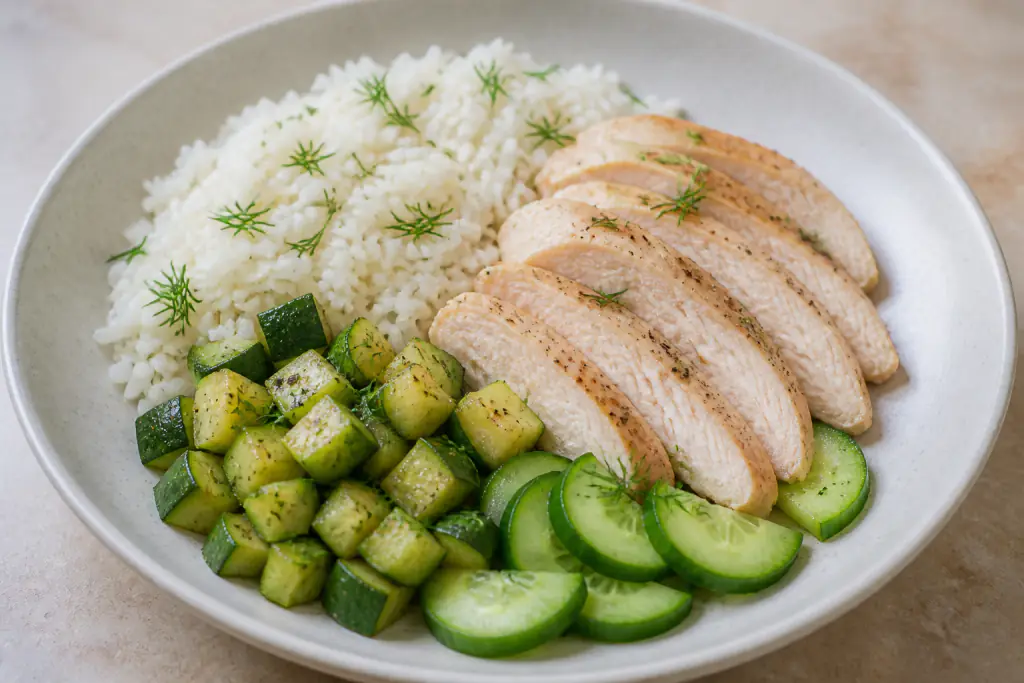
Chicken provides lean protein, rice is easy to portion, and cucumber, zucchini, and dill add freshness without salty sauces.
Who should review it
Diabetes users should measure rice, severe allergy users should verify seasonings, and kidney-condition users need clinician-specific nutrition targets.
Chef tips to make it work
Taste should not disappear when a recipe becomes healthier. Use heat control, layered seasoning, texture contrast, correct doneness, and mistake recovery tips so the final dish feels intentional.
- Fix too much salt by diluting with unsalted ingredients, expanding the batch, or balancing carefully with fat or acid where suitable.
- Avoid burning aromatics by reducing heat before garlic, keeping liquid nearby, and stirring during high-heat stages.
- Use doneness cues: rested steak, flaking fish, safe chicken, soft dal, separated rice grains, and crisp-tender vegetables.
FAQs
Is chicken rice kidney-friendly for everyone?
No. Protein, sodium, potassium, and phosphorus targets differ by person and treatment status.
Why use cucumber and dill?
They add freshness and aroma without relying on high-sodium sauces or acidic dressings.