
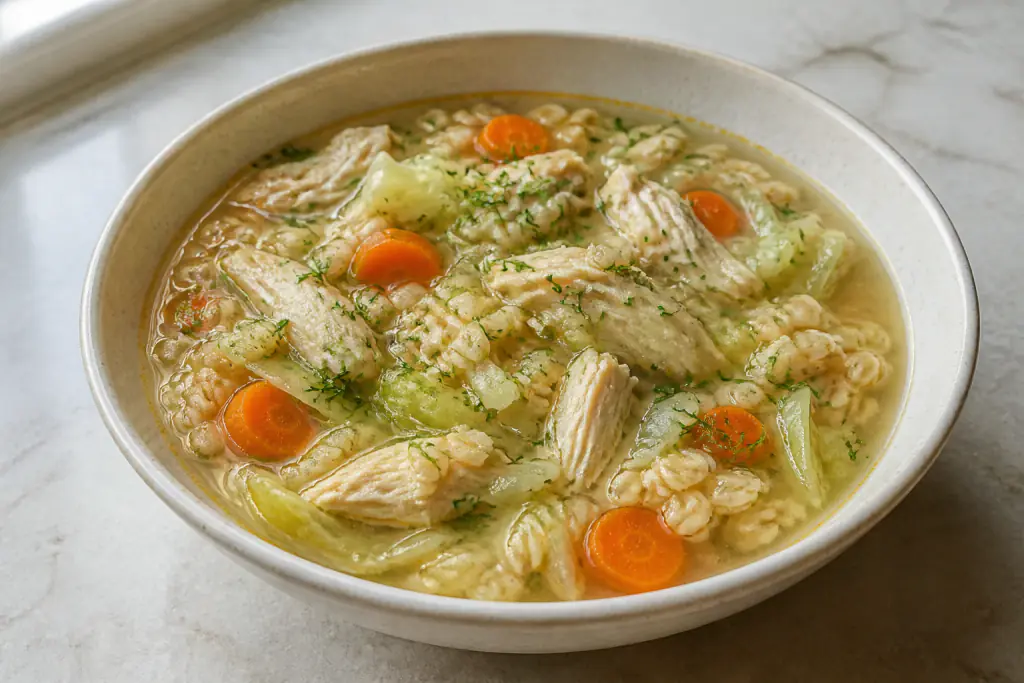
Why oats work in soup
Oats can gently thicken broth and add fiber, while chicken and vegetables keep the soup filling without relying on salty packaged bases.
Sodium is the main control point
Use unsalted or low-sodium broth, measure salt, and avoid bouillon-heavy shortcuts when cooking for hypertension-aware users.
Common mistakes
Do not overcook oats until gluey, and do not hide sodium in seasoning packets, cured meats, or salty garnishes.
Chef tips to make it work
Taste should not disappear when a recipe becomes healthier. Use heat control, layered seasoning, texture contrast, correct doneness, and mistake recovery tips so the final dish feels intentional.
- Fix too much salt by diluting with unsalted ingredients, expanding the batch, or balancing carefully with fat or acid where suitable.
- Avoid burning aromatics by reducing heat before garlic, keeping liquid nearby, and stirring during high-heat stages.
- Use doneness cues: rested steak, flaking fish, safe chicken, soft dal, separated rice grains, and crisp-tender vegetables.
FAQs
Can oats be savory?
Yes. Oats can thicken savory soups when cooked carefully with vegetables, herbs, and protein.
What makes soup high in sodium?
Broth, bouillon, seasoning mixes, cured meats, sauces, and large salt additions are common sources.